
How to Choose the Right Promotional Products Suppliers for Your Organisation
Discover how to find and evaluate promotional products suppliers in Australia to get quality branded merch on time and on budget.

Written by
Yuki Taniguchi
Event Merchandise
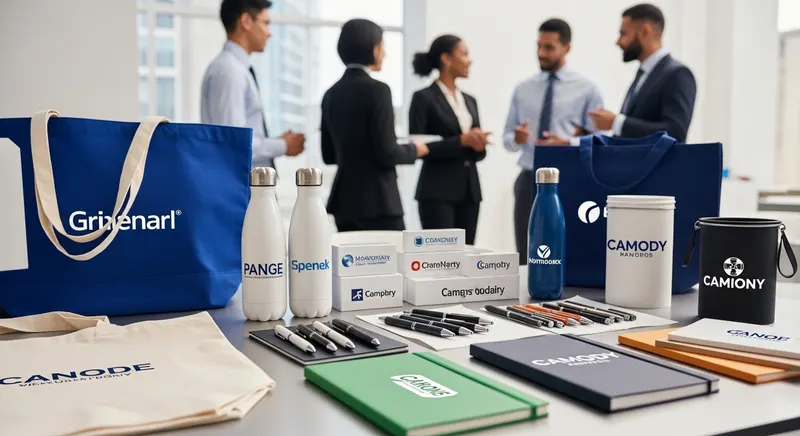
Choosing the right promotional products suppliers can make or break your next branded merchandise project. Whether you’re a Sydney-based events company scrambling to get logoed bags ready before a major conference, a Melbourne council sourcing eco-friendly giveaways for a community expo, or a Brisbane school needing sports day t-shirts printed in bulk — the supplier you partner with will directly shape your results. Get it right, and you’ll receive quality products that land on time and within budget. Get it wrong, and you may end up with a shipment of poorly printed items that arrive a week too late. This guide walks you through everything you need to know to make a smart, informed decision when evaluating Australian promotional products suppliers.
What Do Promotional Products Suppliers Actually Do?
Before diving into evaluation criteria, it’s worth clarifying what a promotional products supplier actually offers. At their core, these businesses source, decorate, and supply branded merchandise to organisations across Australia. Most suppliers either manage in-house decoration (screen printing, embroidery, laser engraving, pad printing, sublimation) or work with trusted production partners to handle the printing and branding side.
A full-service supplier will typically support you from product selection right through to delivery. That includes helping you choose appropriate products for your audience, advising on decoration methods, managing artwork and proof approvals, handling quality control, and coordinating logistics. Some suppliers also offer warehousing and fulfilment services for organisations that distribute merchandise on an ongoing basis.
It’s worth understanding that the Australian promotional products market is broad. Some suppliers specialise in specific categories — apparel, drinkware, stationery, bags — while others offer a wide catalogue across dozens of product types. Knowing what kind of supplier you’re dealing with helps you set expectations from the outset.
Key Factors to Evaluate When Comparing Promotional Products Suppliers
Not all suppliers are created equal. Here are the most important factors to assess before committing to an order.
Product Range and Catalogue Depth
A supplier’s catalogue tells you a lot about their capabilities and focus. Look for depth across the categories you use most frequently. If your organisation regularly needs custom apparel — things like work polo shirts for men, zip-up hoodies, or trucker hats — you’ll want a supplier with strong relationships with reputable blank-garment brands and a proven track record in garment decoration.
Similarly, if you’re sourcing bags, check whether they carry a genuine range. Top-rated branded tote bags, straw tote bags, wine cooler bags, and duffle bags all serve different use cases, and a supplier with limited options may force you into suboptimal choices. The same applies to drinkware, outdoor merchandise, and tech accessories.
Decoration Methods and Print Quality
Decoration quality is arguably the most important variable in the entire process. A product that arrives with a faded print, misaligned logo, or embroidery that’s puckering will reflect poorly on your brand — no matter how good the underlying product is.
Ask suppliers specifically about their decoration capabilities. Do they handle screen printing, embroidery, pad printing, sublimation, and laser engraving in-house, or do they outsource? In-house decoration generally means tighter quality control and faster turnaround. For cylindrical items like drink bottles, ask about wraparound printing options — a capability that not all suppliers offer.
If your organisation uses products outdoors — banners, umbrellas, outdoor drinkware, or sunscreen bottles — it’s worth understanding how different print methods hold up to sun exposure. Our guide to the UV resistance of different printing methods for outdoor products is a useful reference when briefing your supplier on outdoor merchandise requirements.
Minimum Order Quantities (MOQs)
MOQs vary considerably between suppliers and across product categories. Some suppliers maintain high MOQs — 500 units or more — because they’re set up for large-scale production runs. Others are more flexible, accepting orders of 50 or even 25 units for certain product lines.
Understanding MOQs is critical for budget planning. A Gold Coast sporting club ordering custom gym towels for a fundraiser doesn’t need 500 units. A Canberra government department ordering branded water bottles for a national conference might need 1,500. Make sure the suppliers you’re evaluating can accommodate your volume without pushing you into order quantities that exceed your actual needs.
Turnaround Times and Rush Order Capability
Turnaround time is consistently one of the biggest pressure points in promotional merchandise ordering. Most standard orders require two to four weeks from proof approval to delivery — but that window can extend significantly for complex orders, large quantities, or products being manufactured offshore.
Always ask your supplier for their realistic production and freight timelines, not just their best-case scenario. If you’re in Adelaide or Darwin and need products shipped across the country, factor in freight time on top of production. If your event is immovable, ask explicitly whether a rush service is available and what additional cost that attracts.
Ordering well ahead of time is the single most effective thing you can do to protect yourself from deadline stress. A useful rule of thumb: whatever lead time the supplier quotes, add at least one week as a buffer.
Pricing Transparency and Setup Fees
Pricing in the promotional products industry isn’t always straightforward. Base unit prices often exclude setup fees (also called origination fees), which can range from $30 to $150 or more per colour or decoration position. For smaller orders, setup fees can represent a significant portion of your total cost.
Ask for an all-inclusive quote that covers:
- Unit price at your required quantity
- Setup/origination fees
- Any artwork fees (if your files need redrawing to production-ready standards)
- GST
- Freight to your delivery address
Reputable suppliers are transparent about these costs upfront. If you find yourself chasing down hidden fees after receiving an initial quote, that’s a red flag about the working relationship ahead.
Sample Availability
Before committing to a large order, always request a pre-production sample or a catalogue sample of the product. This allows you to assess product quality, size, weight, and finish before you’re locked in. Some suppliers charge for samples (with a credit applied to your order), while others offer them at no cost for qualified buyers.
For high-stakes orders — branded tote bag merchandise for a major conference, promotional products for a VMA event, or customised tote bags for a corporate gifting campaign — a physical sample is non-negotiable. Don’t let time pressure be used as a reason to skip this step.
Red Flags to Watch For
Even experienced procurement managers get caught out occasionally. Here are some warning signs to watch for when working with new promotional products suppliers:
- Unusually low pricing that seems too good to be true often indicates compromised product quality, longer offshore lead times, or unreliable customer service.
- Slow or vague communication during the quoting phase is a reliable predictor of communication issues once your order is placed.
- No proof process — any legitimate supplier should send you a digital proof for approval before production begins.
- Unclear or missing refund/reprint policies — mistakes happen in print production, and you need to know you’re protected if something goes wrong.
- Pressure to commit quickly without adequate time to review quotes, proofs, or product specifications.
Building a Long-Term Supplier Relationship
For organisations that order promotional merchandise regularly — whether that’s quarterly branded gifts like branded calculators for accounting clients or seasonal runs of text shirt merchandise for staff — building a long-term relationship with one or two trusted suppliers pays real dividends.
When suppliers understand your brand standards, preferred products, and approval preferences, the ordering process becomes significantly smoother. You’ll spend less time on briefing, onboarding, and back-and-forth communication. Some suppliers also offer preferred pricing for repeat clients or maintain a library of your approved artwork files to expedite reorders.
That said, it’s smart to maintain relationships with at least two suppliers. This gives you a backup if your primary supplier has capacity issues or a product goes out of stock before a critical event.
How to Brief Your Promotional Products Supplier Effectively
Even the best supplier in Australia can’t deliver a great outcome if they receive a vague brief. The clearer and more complete your brief, the smoother your project will run. Here’s what to include:
- Your organisation name and brand guidelines (logo files in vector format, PMS colour references if applicable)
- Product type and any specific product requirements (e.g., material preferences, size range, colour options)
- Decoration method preference if you have one (e.g., embroidery for Sydney embroidery orders, or screen printing for garments)
- Required quantity at each size or variant
- Delivery address and required-by date
- Budget range (per unit or total)
- Any packaging or labelling requirements
Providing this information upfront helps your supplier give you an accurate quote quickly and reduces the risk of misunderstandings down the line.
Conclusion: Key Takeaways for Finding the Best Promotional Products Suppliers
Choosing the right promotional products suppliers is a process that deserves careful thought, especially when your brand reputation is on the line. By evaluating suppliers across the factors that matter most — product range, print quality, MOQs, turnaround times, pricing transparency, and communication standards — you’ll be well-positioned to find a partner who consistently delivers.
Here are the key takeaways to keep in mind:
- Start the supplier evaluation process early — rushed decisions under deadline pressure rarely lead to the best outcomes.
- Always request a detailed, all-inclusive quote that covers unit pricing, setup fees, artwork costs, GST, and freight.
- Ask for physical samples before committing to large orders, particularly for new product categories or new suppliers.
- Build a brief before you pick up the phone — a clear, specific brief gets you more accurate quotes and faster turnaround from your supplier.
- Cultivate long-term relationships with trusted suppliers — consistency in your partnerships leads to better pricing, smoother communication, and higher-quality outcomes over time.
Finding the right promotional products supplier isn’t a one-size-fits-all exercise, but armed with the right criteria and a clear brief, Australian organisations of every size can secure merchandise that genuinely reflects their brand.